01 · ENTER
Pick a hero.
Start with a small deck and one impossible-looking tower.
Game Guide · your first class
You are a hero climbing a magical tower. Each floor gives you a small puzzle: read the danger, play the best cards you have, take the lesson, and choose the next step.
The story of a run
Start with a small deck and one impossible-looking tower.
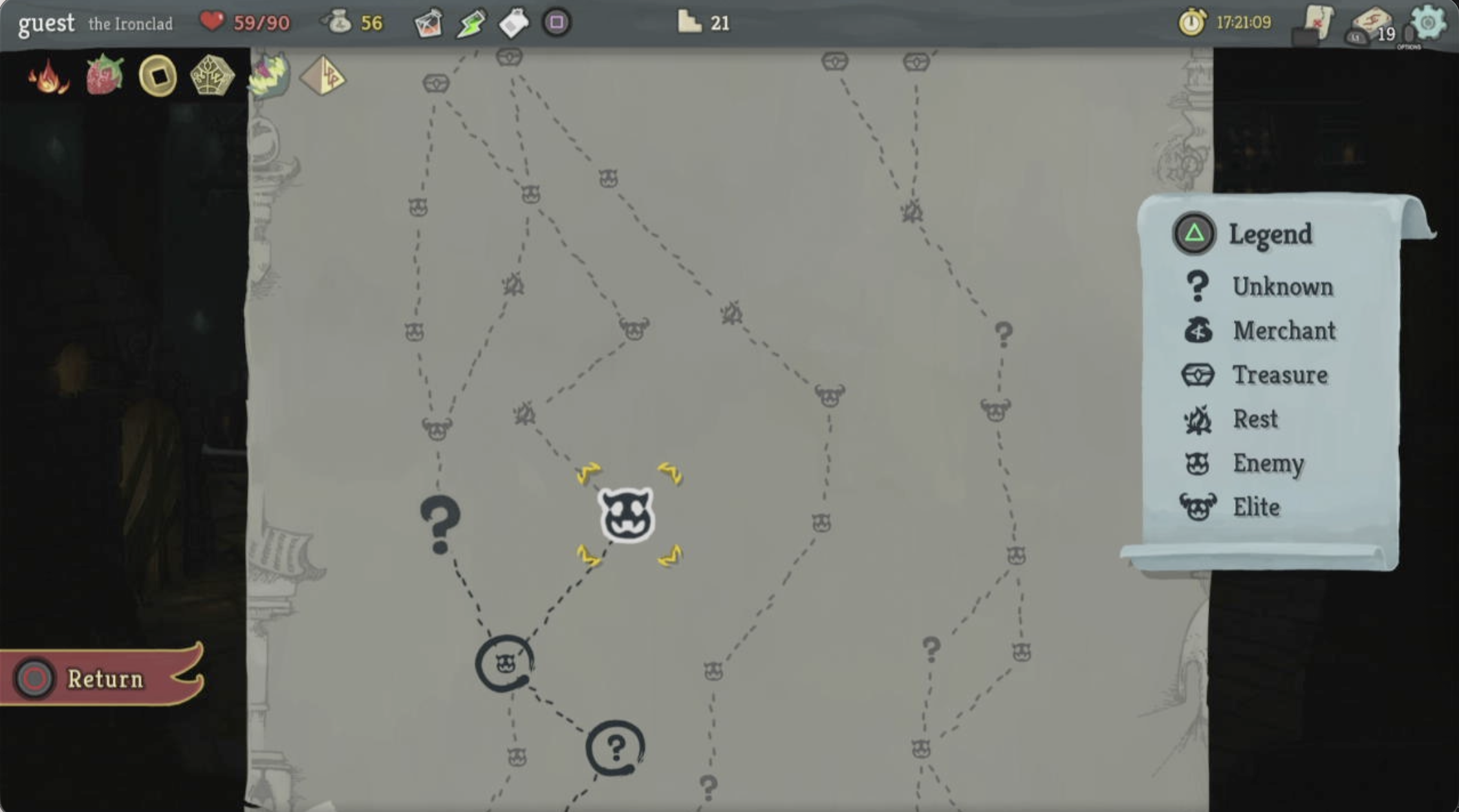
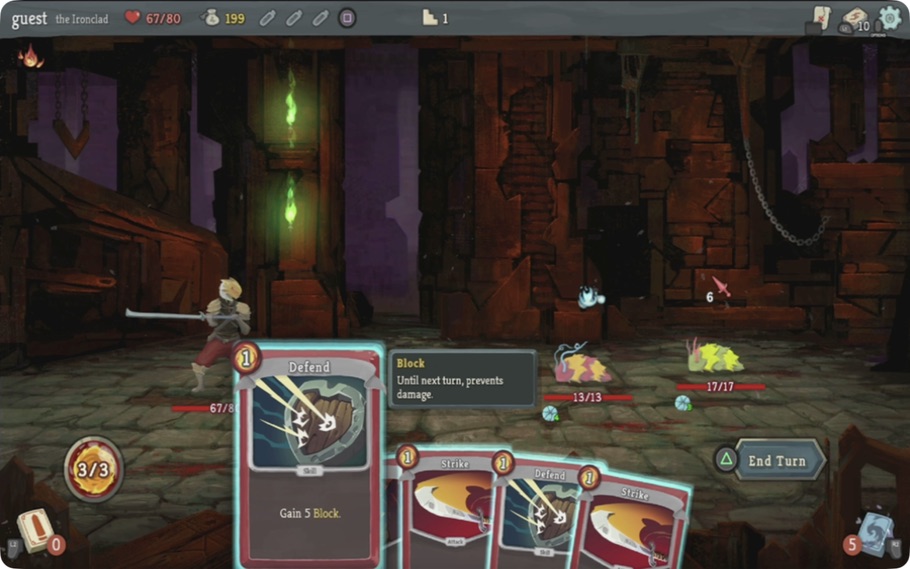
The map offers a fight, rest, shop, elite, or mystery.
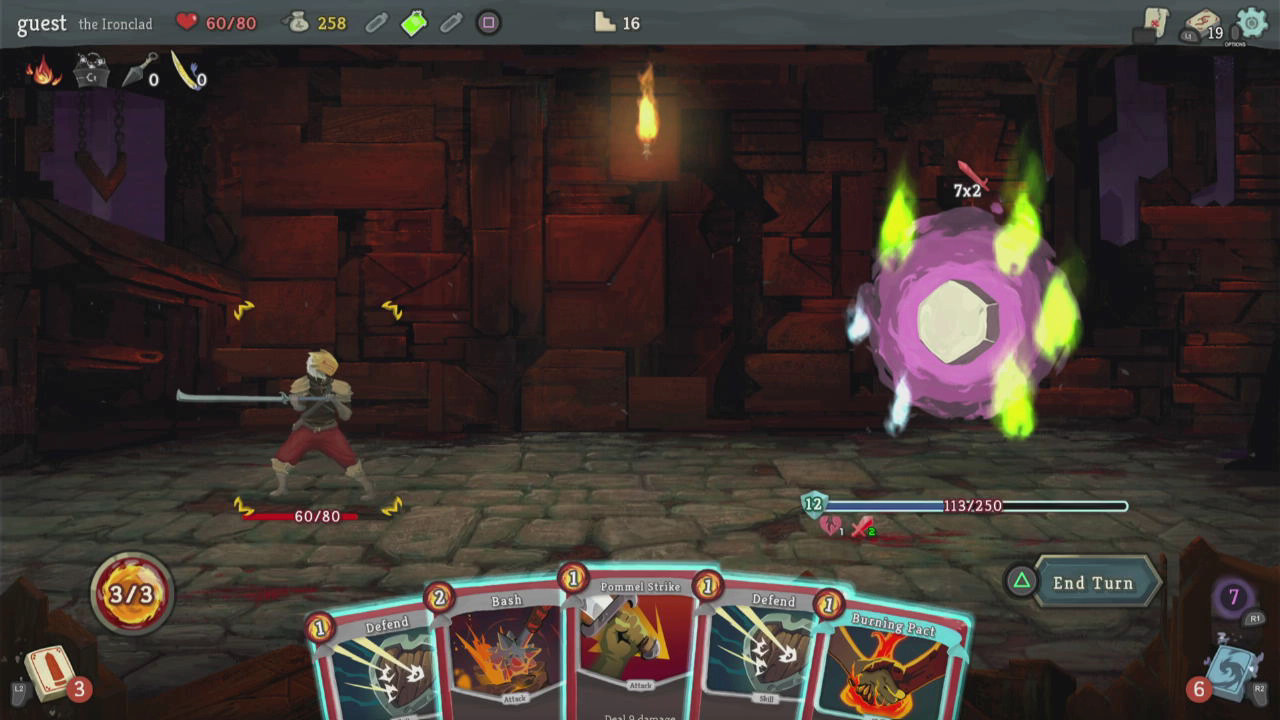
Read intent. Spend energy. Use cards. Stay alive.
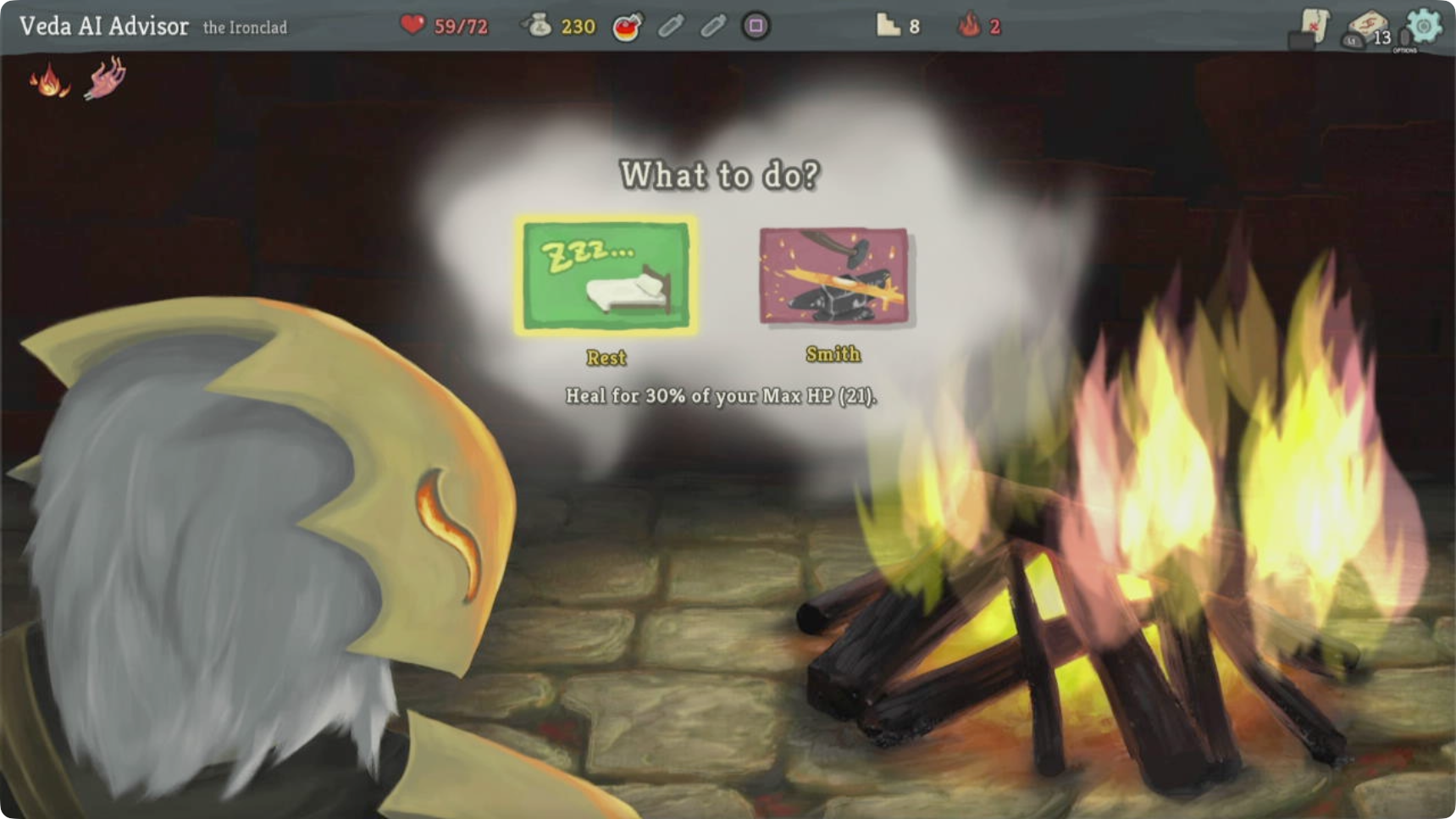
Cards, relics, potions, gold, and damage change your future.
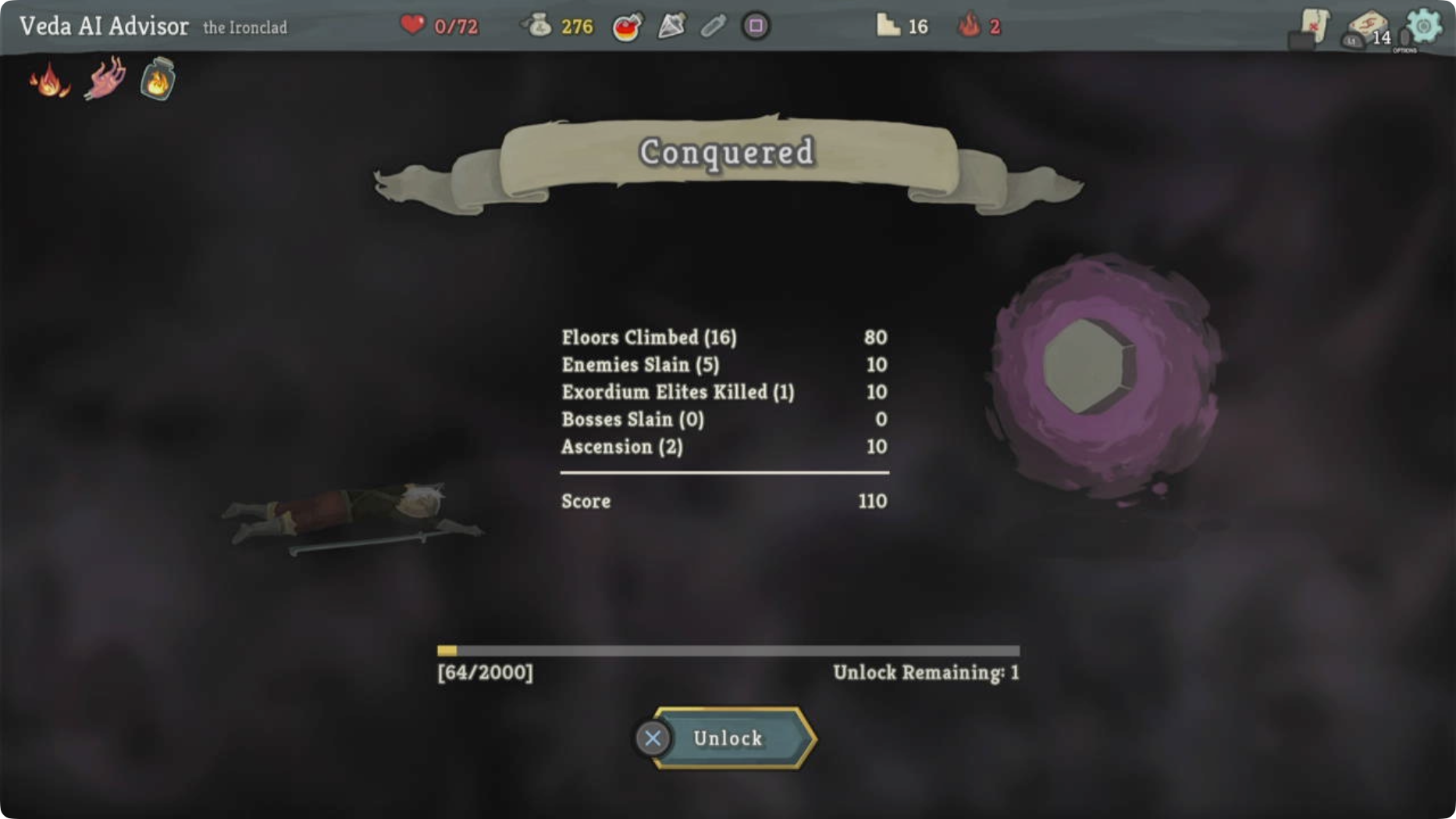
Win, lose, learn—and carry the story into the next run.
Slay the Spire is not a fixed story. It is the story your decisions create.
Imagine a choose-your-own-adventure book where every fight is a card puzzle. You do not bring a perfect team from home. You build your team while climbing—and every choice changes what the next page can be.
Lesson 2 · VEDA’s classroom board
Stay alive long enough to beat the Act bosses. Your deck is not finished at the start—you teach it what it needs before the next test.
Lesson 1 · the whole game in 20 seconds
Follow the map toward fights, campfires, shops, chests, elites, or mysteries.
Read enemy intent, spend your energy on Attack, Skill, and Power cards, then end the turn.
Gain cards, relics, potions, gold, or a little damage that changes your next choice.
Survive an Act, beat its boss, and climb into a harder question.
Reach the top, defeat the Act bosses, and build a deck that can answer the final fight.
The story of your run
At the bottom of the tower, your character is strong enough to begin but not strong enough to finish. The map offers several doors. You choose one, meet what is behind it, and use the reward—or the lesson—to make the next door possible. There are three main Acts, a boss at the end of each, and a final climb of roughly fifty floors when you chase the Heart.
Ironclad heals after fights, Silent plays fast, Defect channels orbs, and Watcher changes stance. Each has a different way to win.
Fights teach you. Elites pay more but hurt more. Campfires heal or upgrade. Shops sell answers. Events surprise you.
Energy is your tiny budget. Attack cards hurt enemies, Skill cards defend or set you up, and Powers keep helping later.
Relics bend the rules, potions rescue bad turns, and every win or loss teaches you what the next run needs.
One turn, explained
Enemy intent shows the danger: attack, defend, weaken, or something stranger.
Your energy is a small budget. Cards cost energy, and the budget resets next turn.
Block the hit, defeat the threat, drink a potion, or accept a cost to prepare for the next floor.
That is the whole rhythm: read the screen, choose a legal line, see what happened, then make the next choice with more information.
Lesson 4 · the words on VEDA’s board
Attack cards deal damage. Skill cards block, draw, weaken, or prepare. Power cards change the rules for the rest of the fight. You may skip a reward—small decks are easier to draw well.
The intent icon tells you what is coming: an attack, Block, a debuff, a summon, or a trick. The best move answers the danger you can see.
Relics work automatically or unlock a strategy. Potions are one-use helpers: damage, Block, healing, energy, or a panic button for a boss turn.
Act 1 teaches basics, Act 2 punishes weak plans, and Act 3 tests whether your deck can do its job under pressure.
Ascension levels are optional challenge steps. They add harsher rules—less healing, stronger enemies, tougher bosses—so you learn the game more deeply.
Win fights, improve your deck, defeat the Act bosses, and—when ready—face the Heart. Winning is not one perfect turn; it is many sensible turns in a row.
Play it yourself
Start with the first floor. Watch the intent, spend the energy, and let the run teach you its language.